

Content marketing is important for several reasons:

Builds Brand Awareness: By consistently creating and distributing valuable content, a brand can increase its visibility and reach a wider audience. Over time, this helps in building brand awareness and recognition among potential customers.
Engages Target Audience: Content marketing allows brands to engage with their target audience on topics that matter to them. By providing valuable information, answering questions, and addressing pain points, brands can foster deeper connections with their audience.
Establishes Authority and Credibility: Producing high-quality content that addresses the needs and interests of the audience helps in establishing the brand as an authority in its industry. When consumers perceive a brand as knowledgeable and trustworthy, they are more likely to choose it over competitors.
Drives Traffic and Leads: Content marketing can attract organic traffic to a brand’s website or other digital properties through search engine optimization (SEO). Valuable content also serves as a lead magnet, attracting potential customers who are interested in the brand’s products or services.
Supports Customer Journey: Content marketing plays a crucial role at various stages of the customer journey. From raising awareness and generating interest to nurturing leads and facilitating conversions, content helps guide customers through the buying process.
Increases Customer Retention: By providing ongoing value and staying connected with existing customers through relevant content, brands can improve customer retention rates. Engaged and satisfied customers are more likely to become repeat buyers and brand advocates.
Cost-Effective Marketing Strategy: Compared to traditional advertising methods, content marketing is often more cost-effective. While it requires an investment of time and resources to create quality content, the long-term benefits, such as increased brand loyalty and customer lifetime value, outweigh the initial costs.
Content marketing encompasses various types of content, each serving different purposes and catering to different audience preferences. Some common types of content marketing include:
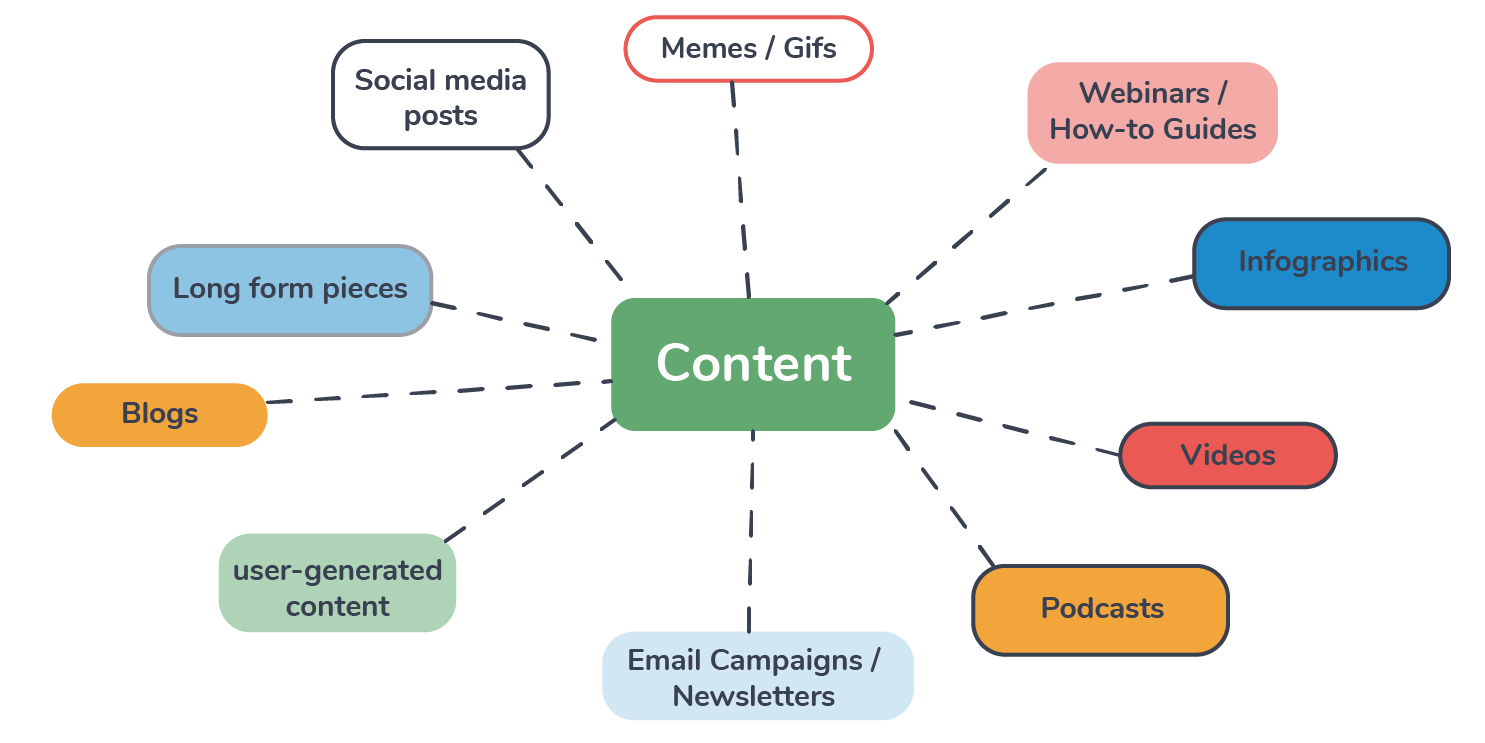
Blog Posts and Articles: Written content in the form of blog posts, articles, and guides is a staple of content marketing. These pieces provide valuable information, answer questions, and address pain points relevant to the target audience.
Videos: Video content is highly engaging and versatile, making it a popular choice for content marketing. This includes explainer videos, tutorials, product demonstrations, vlogs, interviews, and more.
Infographics: Infographics combine visuals, data, and text to present information in a visually appealing and easy-to-digest format. They are effective for explaining complex concepts, presenting statistics, and summarizing key points.
Podcasts: Podcasts have gained popularity as a convenient and accessible medium for consuming content. Brands can create podcasts to share industry insights, interview experts, discuss trends, and connect with their audience on a more personal level.
Social Media Posts: Content shared on social media platforms such as Facebook, Instagram, Twitter, LinkedIn, and TikTok can include text, images, videos, and other multimedia formats. Social media content helps brands engage with their audience, share updates, and promote their products or services.
Ebooks and Whitepapers: Long-form content such as ebooks and whitepapers provides in-depth information on specific topics or industry trends. These resources are often used as lead magnets to capture email addresses and generate leads.
Case Studies and Success Stories: Case studies and success stories showcase real-life examples of how a brand’s products or services have helped customers solve problems or achieve their goals. They provide social proof and build credibility for the brand.
Email Newsletters: Email newsletters deliver valuable content directly to subscribers’ inboxes on a regular basis. They can include blog updates, curated content, special offers, and personalized recommendations to keep subscribers engaged and informed.
Webinars and Online Events: Webinars and online events allow brands to interact with their audience in real-time, deliver educational content, and answer questions. They are effective for building authority, generating leads, and nurturing relationships with prospects.
Interactive Content: Interactive content such as quizzes, polls, surveys, calculators, and assessments engages the audience and encourages participation. It provides personalized experiences and valuable insights into audience preferences and interests.