
Data analysis in digital marketing refers to the process of collecting, interpreting, and making sense of data generated from various digital marketing channels and activities. It involves using statistical and analytical techniques to extract valuable insights, trends, patterns, and metrics from digital marketing data, which can then be used to inform strategic decision-making and optimize marketing campaigns for better performance and results.

Key aspects of data analysis in digital marketing include:
Data Collection: Collecting data from multiple sources such as website analytics, social media platforms, email marketing software, advertising platforms (e.g., Google Ads, Facebook Ads), CRM systems, and customer feedback channels.
Data Cleaning and Preparation: Cleaning and organizing the collected data to ensure accuracy, consistency, and completeness. This may involve removing duplicates, correcting errors, standardizing formats, and filling in missing values.
Data Exploration: Exploring the data to identify trends, patterns, correlations, and outliers. This may involve visualizing data using charts, graphs, and dashboards to gain insights into customer behavior, campaign performance, and market trends.
Statistical Analysis: Performing statistical analysis to quantify relationships between variables, test hypotheses, and make predictions. Common statistical techniques used in digital marketing analysis include regression analysis, correlation analysis, hypothesis testing, and predictive modeling.
Segmentation and Targeting: Segmenting the audience based on demographics, behavior, interests, and other criteria to tailor marketing messages and offers to specific customer segments. Data analysis helps identify high-value segments and target them more effectively.
Performance Measurement: Measuring the performance of digital marketing campaigns and channels using key performance indicators (KPIs) such as conversion rate, click-through rate (CTR), return on investment (ROI), cost per acquisition (CPA), customer lifetime value (CLV), and engagement metrics.
Optimization and Insights: Using insights gained from data analysis to optimize marketing strategies, tactics, and campaigns for better results. This may involve refining targeting criteria, adjusting messaging, reallocating budget, testing different creative elements, and identifying opportunities for improvement.
Predictive Analytics: Using historical data and statistical modeling techniques to predict future trends, customer behavior, and outcomes. Predictive analytics can help businesses anticipate market changes, identify emerging opportunities, and make proactive decisions to stay ahead of the competition.
Overall, data analysis plays a critical role in digital marketing by enabling businesses to gain actionable insights, drive informed decision-making, and achieve marketing objectives more effectively in today’s data-driven landscape.
Data analysis is crucial for businesses in digital marketing for several reasons:

Informed Decision-Making: Data analysis provides valuable insights into customer behavior, preferences, and trends, allowing businesses to make informed decisions about their marketing strategies and tactics. By understanding what resonates with their audience, businesses can optimize their marketing efforts to achieve better results.
Optimization of Marketing Campaigns: Data analysis helps businesses evaluate the performance of their digital marketing campaigns and identify areas for improvement. By analyzing metrics such as conversion rates, click-through rates, and ROI, businesses can optimize their campaigns to increase effectiveness and maximize returns on investment.
Targeted Marketing: Data analysis enables businesses to segment their audience based on various criteria such as demographics, interests, and purchase behavior. By targeting specific customer segments with personalized messaging and offers, businesses can increase the relevance of their marketing efforts and improve engagement and conversion rates.
Identification of Trends and Opportunities: Data analysis allows businesses to identify emerging trends, market opportunities, and consumer preferences. By analyzing data from social media, website traffic, and other digital channels, businesses can stay ahead of the curve and capitalize on new opportunities before their competitors.
Cost Reduction: Data analysis helps businesses identify inefficiencies and areas of waste in their marketing efforts, allowing them to reallocate resources more effectively. By optimizing marketing spend and focusing on strategies that deliver the highest ROI, businesses can reduce costs and improve profitability.
Customer Insights: Data analysis provides businesses with valuable insights into their customers’ needs, preferences, and pain points. By understanding their customers better, businesses can tailor their products, services, and marketing efforts to meet their needs more effectively, leading to higher customer satisfaction and loyalty.
Measurable Results: Data analysis allows businesses to track and measure the results of their marketing efforts accurately. By setting clear KPIs and monitoring key metrics, businesses can assess the impact of their marketing campaigns and make adjustments as needed to achieve their goals.
Overall, data analysis is essential for businesses in digital marketing because it enables them to make data-driven decisions, optimize their marketing efforts, target their audience more effectively, identify trends and opportunities, reduce costs, and achieve measurable results. In today’s competitive business environment, businesses that leverage data analysis effectively have a significant advantage in driving growth and success.
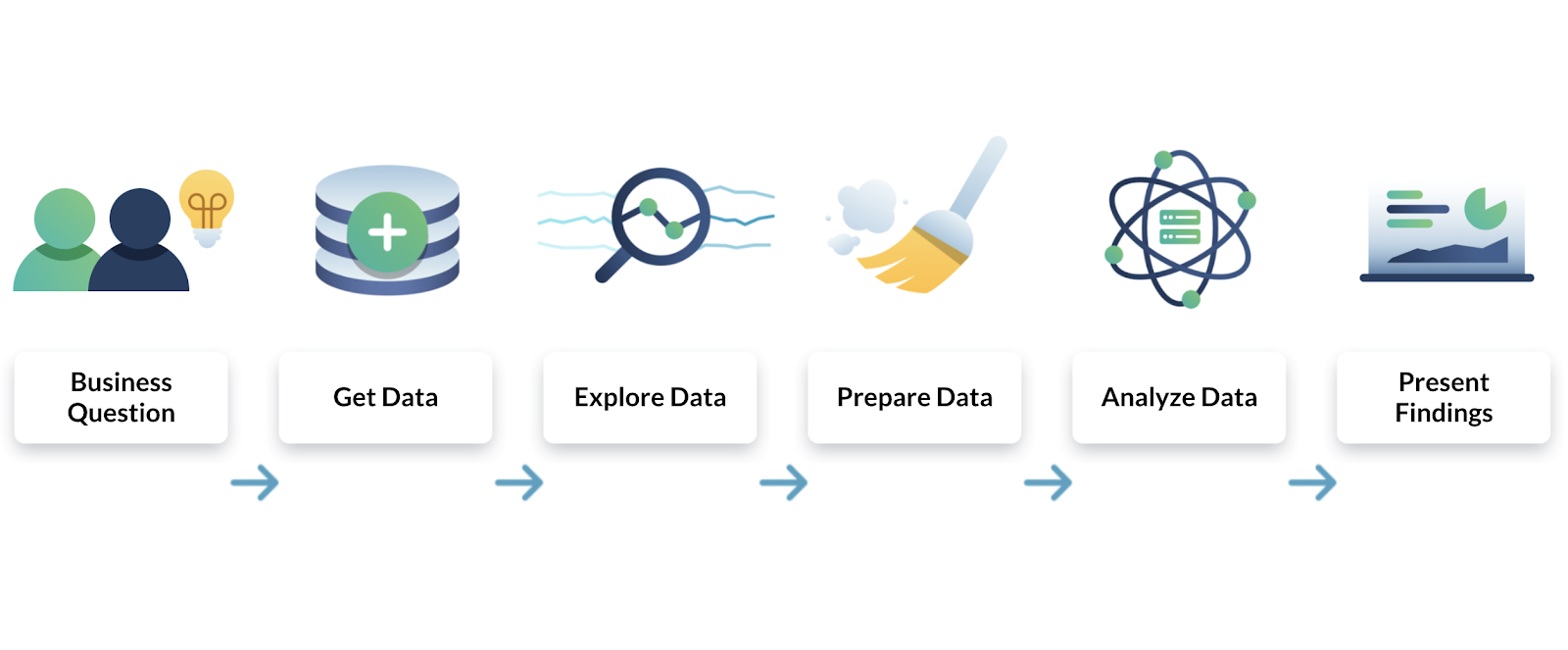
The data analysis process in digital marketing involves several steps to collect, analyze, and derive insights from data generated across various digital marketing channels and activities. Here’s a structured approach to the data analysis process in digital marketing:
![A Step-by-Step Guide to the Data Analysis Process [2024]](https://careerfoundry.com/en/wp-content/uploads/old-blog-uploads/the-data-analysis-process-1.jpg)
-
Define Objectives: Clearly define the objectives of your data analysis efforts. Identify what specific questions you want to answer or problems you want to solve through data analysis. For example, you may want to understand which marketing channels are driving the most website traffic or which email campaigns are generating the highest conversion rates.
-
Data Collection: Gather data from multiple sources such as website analytics (e.g., Google Analytics), social media platforms (e.g., Facebook Insights, Twitter Analytics), email marketing software (e.g., Mailchimp, Constant Contact), advertising platforms (e.g., Google Ads, Facebook Ads), CRM systems, and customer feedback channels.
-
Data Cleaning and Preparation: Clean and preprocess the collected data to ensure accuracy, consistency, and completeness. This may involve tasks such as removing duplicates, correcting errors, standardizing formats, filling in missing values, and merging data from different sources.
-
Exploratory Data Analysis (EDA): Explore the data to identify patterns, trends, correlations, and outliers. Use statistical and visualization techniques to gain insights into customer behavior, campaign performance, and market trends. Common EDA techniques include summary statistics, histograms, scatter plots, and heatmaps.
-
Hypothesis Testing: Formulate hypotheses based on your objectives and use statistical tests to determine whether there is a significant difference or relationship between variables. For example, you may want to test whether there is a significant difference in conversion rates between two different ad creatives or whether there is a correlation between email open rates and time of day.
-
Segmentation and Targeting: Segment your audience based on demographics, behavior, interests, or purchase history. Analyze each segment separately to understand their unique characteristics and preferences. This allows you to tailor your marketing messages and offers to specific audience segments for better engagement and conversion rates.
-
Performance Measurement: Measure the performance of your digital marketing campaigns using key performance indicators (KPIs) such as conversion rate, click-through rate (CTR), return on investment (ROI), cost per acquisition (CPA), customer lifetime value (CLV), and engagement metrics. Compare performance across different campaigns, channels, and time periods to identify areas for improvement.
-
Predictive Modeling: Use historical data and predictive modeling techniques to forecast future trends, customer behavior, and outcomes. This may involve techniques such as regression analysis, time series analysis, machine learning, and predictive analytics tools to make data-driven predictions and recommendations for future marketing strategies.
-
Reporting and Visualization: Present your findings and insights in a clear and concise manner using reports, dashboards, and visualizations. Use charts, graphs, and tables to communicate key findings, trends, and recommendations to stakeholders and decision-makers effectively.
-
Iterate and Optimize: Continuously monitor and evaluate the performance of your digital marketing efforts and iterate on your strategies based on data-driven insights. Test different strategies, tactics, and messaging to identify what works best for your audience and optimize your campaigns for better results over time.
By following these steps and employing a structured approach to data analysis, businesses can effectively leverage data to inform their digital marketing strategies, optimize campaign performance, and drive business growth and success.
Top techniques and tools for data analysis in digital marketing include:

-
Google Analytics: Google Analytics is a powerful web analytics tool that provides valuable insights into website traffic, user behavior, and conversions. It offers features such as audience segmentation, conversion tracking, goal setting, and customizable reports for analyzing website performance.
-
Social Media Analytics Platforms: Social media analytics tools such as Facebook Insights, Twitter Analytics, and LinkedIn Analytics provide insights into audience demographics, engagement metrics, post performance, and advertising effectiveness across social media platforms.
-
Email Marketing Platforms: Email marketing platforms like Mailchimp, Constant Contact, and HubSpot offer robust analytics features for tracking email campaign performance. These tools provide metrics such as open rates, click-through rates, conversion rates, and subscriber engagement to analyze the effectiveness of email marketing efforts.
-
CRM Systems: Customer relationship management (CRM) systems such as Salesforce, HubSpot CRM, and Zoho CRM provide data analysis capabilities for tracking customer interactions, lead generation, sales pipeline management, and customer segmentation.
-
Data Visualization Tools: Data visualization tools such as Tableau, Power BI, and Google Data Studio enable marketers to create interactive and visually appealing dashboards and reports for analyzing and presenting marketing data. These tools make it easy to visualize trends, patterns, and insights from complex datasets.
-
Statistical Analysis Software: Statistical analysis software such as R, Python (with libraries like pandas and NumPy), and SPSS are used for advanced statistical analysis, hypothesis testing, regression analysis, and predictive modeling in digital marketing.
-
Heatmap and A/B Testing Tools: Heatmap tools like Crazy Egg and Hotjar provide insights into user behavior on websites by visualizing where users click, scroll, and spend time. A/B testing tools like Optimizely and Google Optimize allow marketers to test different variations of website elements and analyze which version performs better in terms of conversion rates and user engagement.
-
Predictive Analytics Platforms: Predictive analytics platforms such as IBM Watson Analytics, RapidMiner, and DataRobot leverage machine learning algorithms to analyze historical data and make predictions about future trends, customer behavior, and marketing outcomes.
-
Google Tag Manager: Google Tag Manager is a tag management system that allows marketers to deploy and manage website tracking tags (e.g., Google Analytics, Facebook Pixel) without requiring manual code changes. It simplifies data collection and analysis by centralizing tag management and providing real-time insights into website performance.
-
Keyword Research Tools: Keyword research tools such as SEMrush, Ahrefs, and Moz provide insights into keyword rankings, search volume, competition, and trends for optimizing SEO and content marketing strategies based on data-driven keyword analysis.
By leveraging these techniques and tools for data analysis in digital marketing, businesses can gain valuable insights into their marketing performance, customer behavior, and market trends, allowing them to make informed decisions and optimize their marketing strategies for better results.
Data analysis plays a crucial role in growing a business by providing valuable insights and guiding strategic decision-making across various aspects of the organization. Here’s how data analysis works to grow a business:
Understanding Customer Behavior: Data analysis helps businesses understand customer preferences, needs, and behavior by analyzing data collected from various touchpoints such as website interactions, social media engagement, email interactions, and purchase history. By gaining insights into customer demographics, browsing patterns, and purchasing habits, businesses can tailor their products, services, and marketing efforts to better meet customer needs and preferences, leading to increased customer satisfaction and loyalty.
Optimizing Marketing Strategies: Data analysis enables businesses to measure the effectiveness of their marketing strategies and campaigns by analyzing key performance indicators (KPIs) such as conversion rates, click-through rates, return on investment (ROI), and customer acquisition costs. By identifying which marketing channels, tactics, and messages are most effective in driving engagement and conversions, businesses can optimize their marketing efforts to achieve better results and maximize their marketing budget.
Identifying Market Trends and Opportunities: Data analysis allows businesses to identify emerging market trends, consumer preferences, and competitive insights by analyzing industry data, market research, and customer feedback. By monitoring market trends and competitor activities, businesses can identify new opportunities for growth, innovation, and market expansion, allowing them to stay ahead of the competition and capitalize on emerging opportunities before their competitors.
Improving Product and Service Offerings: Data analysis provides valuable insights into customer feedback, product usage patterns, and performance metrics, allowing businesses to identify areas for improvement and innovation in their products and services. By analyzing customer feedback, reviews, and support tickets, businesses can identify common pain points, usability issues, and feature requests, allowing them to prioritize product enhancements and deliver better experiences for their customers.
Enhancing Operational Efficiency: Data analysis helps businesses optimize their internal processes and operations by identifying inefficiencies, bottlenecks, and areas for improvement. By analyzing operational data such as supply chain metrics, production costs, and inventory levels, businesses can identify opportunities to streamline processes, reduce costs, and improve productivity, leading to increased efficiency and profitability.
Predicting Future Trends and Outcomes: Data analysis enables businesses to leverage predictive analytics techniques to forecast future trends, customer behavior, and business outcomes based on historical data and statistical modeling. By analyzing historical sales data, market trends, and customer behavior, businesses can make informed predictions about future demand, sales projections, and revenue forecasts, allowing them to anticipate market changes and proactively adjust their strategies to capitalize on emerging opportunities and mitigate risks.
Overall, data analysis is a powerful tool for businesses to gain actionable insights, make informed decisions, and drive growth and success across all aspects of the organization. By leveraging data analysis effectively, businesses can improve customer satisfaction, optimize marketing efforts, identify new opportunities, enhance product offerings, streamline operations, and stay ahead of the competition in today’s data-driven business environment.
The future of data analysis in digital marketing is likely to be shaped by several key trends:
-
Advanced Analytics Techniques: As data volumes continue to grow, businesses will increasingly adopt advanced analytics techniques such as machine learning, artificial intelligence (AI), and predictive analytics to gain deeper insights from their data. These techniques will enable businesses to uncover hidden patterns, predict future trends, and personalize marketing efforts at scale.
-
Real-time Data Analysis: With the increasing demand for real-time insights, businesses will invest in technologies that enable real-time data collection, processing, and analysis. Real-time data analysis will allow businesses to respond quickly to changing market conditions, customer preferences, and competitive threats, enabling more agile and responsive marketing strategies.
-
Cross-channel Attribution: As consumers interact with brands across multiple channels and devices, there will be a growing emphasis on cross-channel attribution models that accurately attribute conversions and sales to the various touchpoints in the customer journey. Businesses will invest in technologies that enable seamless tracking and attribution across channels, allowing for more accurate measurement of marketing ROI and better allocation of marketing budgets.
-
Privacy and Compliance: With the increasing focus on data privacy and regulations such as GDPR and CCPA, businesses will need to prioritize data privacy and compliance in their data analysis practices. This will involve implementing robust data governance processes, ensuring data security, and obtaining explicit consent from consumers for data collection and processing.
-
Augmented Analytics: Augmented analytics platforms that leverage AI and machine learning to automate data preparation, analysis, and insights generation will become more prevalent. These platforms will enable marketers to easily access and analyze data without requiring specialized technical skills, democratizing access to data-driven insights across the organization.
-
Customer-centric Analytics: There will be a shift towards more customer-centric analytics approaches that focus on understanding and predicting individual customer behavior and preferences. Businesses will leverage customer data platforms (CDPs) and advanced segmentation techniques to create highly personalized and targeted marketing campaigns that resonate with individual customers.
-
Ethical Data Usage: As concerns about data privacy and ethical data usage continue to grow, businesses will need to adopt transparent and ethical practices in their data analysis efforts. This will involve providing clear communication about data collection and usage practices, obtaining informed consent from consumers, and implementing safeguards to protect consumer privacy and security.
Overall, the future of data analysis in digital marketing will be characterized by advancements in analytics techniques, real-time insights, cross-channel attribution, privacy and compliance, augmented analytics, customer-centric approaches, and ethical data usage practices. Businesses that embrace these trends and invest in data-driven marketing strategies will be well-positioned to succeed in an increasingly data-driven and customer-centric digital landscape.