
What is landing page?
A landing page is a standalone web page specifically designed for a marketing or advertising campaign with a single focused objective, typically to capture visitor information or prompt a specific action. Unlike typical website pages, which may have multiple navigation links and serve various purposes, a landing page is streamlined and designed to guide visitors toward a particular conversion goal. (click the image to view in details)
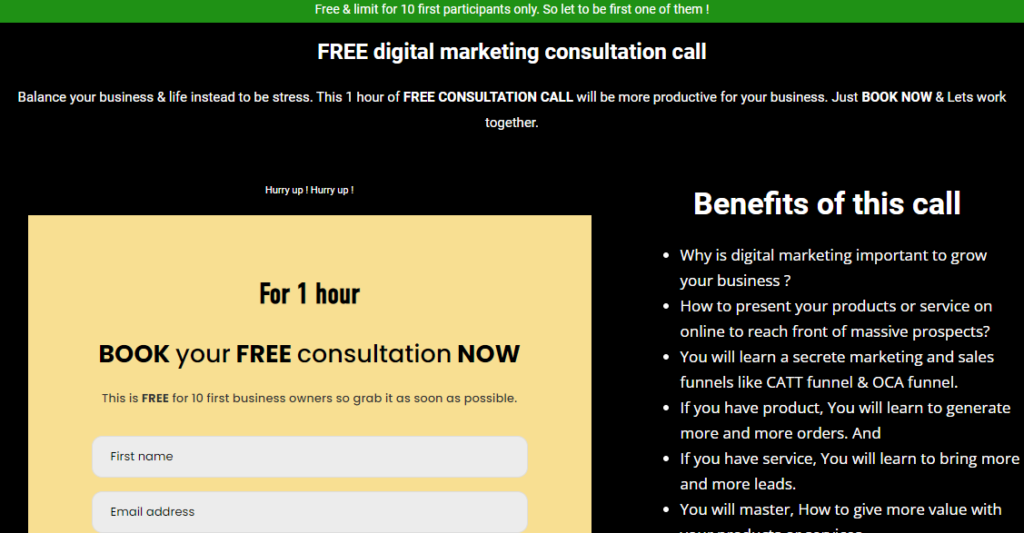
Key characteristics of a landing page include:
Clear Call to Action (CTA): A landing page prominently features a clear and compelling call to action, directing visitors to take a specific action such as filling out a form, making a purchase, signing up for a newsletter, or downloading a resource.
Focused Message: A landing page delivers a focused and targeted message that aligns with the corresponding marketing campaign or advertisement. It emphasizes the benefits or value proposition of the offer and addresses the visitor’s needs or pain points.
Minimal Distractions: Unlike website pages, which may have navigation menus, sidebar widgets, and other elements, a landing page minimizes distractions and extraneous information to keep visitors focused on the desired action.
Lead Capture Form: Many landing pages include a lead capture form where visitors can provide their contact information in exchange for access to a resource or offer. The form typically asks for basic information such as name, email address, and sometimes additional details relevant to the offer.
Visual Elements: Effective landing pages often incorporate visually appealing elements such as images, videos, infographics, or testimonials to reinforce the message and enhance engagement.
Mobile Optimization: With the increasing use of mobile devices, landing pages should be optimized for mobile responsiveness to ensure a seamless user experience across different screen sizes and devices.
Tracking and Analytics: Landing pages are often integrated with tracking and analytics tools to measure key performance metrics such as conversion rate, click-through rate, bounce rate, and lead generation effectiveness. This data helps marketers evaluate the success of their campaigns and make data-driven optimizations.
Overall, landing pages are a critical component of digital marketing campaigns, serving as a focused destination for driving conversions and capturing leads. By creating well-designed and optimized landing pages tailored to specific campaign objectives, businesses can maximize the effectiveness of their marketing efforts and achieve higher conversion rates.
Landing page vs. Home page
The primary differences between a landing page and a home page lie in their purpose, design, and functionality:
Purpose:
- Landing Page: A landing page is specifically designed for a single marketing or advertising campaign with a focused objective, such as capturing leads, promoting a product or service, or driving conversions. Its purpose is to guide visitors toward a specific action or conversion goal.
- Home Page: A home page serves as the main entry point to a website and typically provides an overview of the website’s content, navigation options, and key information about the organization or brand. Its purpose is to welcome visitors, introduce the brand, and direct them to explore further sections of the website.
Design:
- Landing Page: A landing page is designed with a singular focus and minimal distractions to encourage visitors to take a specific action. It often features a prominent call to action (CTA), a lead capture form, compelling visuals, and concise messaging tailored to the campaign’s objective.
- Home Page: A home page tends to have a more comprehensive design that reflects the overall branding and identity of the website. It may include navigation menus, featured content or products, social proof elements, and links to various sections or pages within the website.
Functionality:
- Landing Page: A landing page typically has limited functionality and is optimized for a specific conversion goal. It may have a lead capture form, interactive elements, and tracking capabilities to measure campaign performance.
- Home Page: A home page serves as a gateway to the entire website and offers broader functionality, including navigation options to explore different sections or pages, search functionality, contact information, and links to additional resources or content.
Audience and Traffic Source:
- Landing Page: Visitors to a landing page are often directed from external sources such as advertisements, email campaigns, social media posts, or search engine results pages (SERPs). The content and messaging on a landing page are tailored to match the specific campaign or promotional offer that drove the visitor to the page.
- Home Page: Visitors to a home page may come from various sources, including direct traffic, organic search, referral links, or internal navigation within the website. The home page aims to provide a cohesive and welcoming experience for all visitors, regardless of their entry point.
In summary, while both landing pages and home pages are essential elements of a website, they serve different purposes and are designed with distinct objectives in mind. Landing pages are focused on driving conversions for specific campaigns, whereas home pages provide a broader introduction to the website and its content.
Product landing page vs. Service landing page
Service landing pages and product landing pages serve different purposes and are tailored to promote different offerings. Here are the key differences between the two:
Focus:
- Service Landing Page: A service landing page focuses on promoting a specific service offered by a business. It provides detailed information about the service, its features, benefits, and how it addresses the needs of potential customers. The primary goal of a service landing page is to persuade visitors to inquire about or purchase the service.
- Product Landing Page: A product landing page highlights a specific product offered by a business. It showcases the product’s features, specifications, benefits, and unique selling points. The primary goal of a product landing page is to encourage visitors to make a purchase or learn more about the product.
Content:
- Service Landing Page: The content on a service landing page typically focuses on describing the service in detail, explaining its value proposition, and addressing common questions or concerns that potential customers may have. It may include testimonials, case studies, and examples to demonstrate the benefits of the service.
- Product Landing Page: The content on a product landing page emphasizes the product’s features, functionality, and how it solves a specific problem or fulfills a need for customers. It may include product images, videos, customer reviews, and comparison charts to showcase the product’s capabilities and benefits.
Call to Action (CTA):
- Service Landing Page: The call to action (CTA) on a service landing page typically encourages visitors to inquire about the service, request a consultation, sign up for a free trial, or contact the business for more information. The CTA is designed to prompt visitors to take the next step in engaging with the service.
- Product Landing Page: The CTA on a product landing page typically prompts visitors to make a purchase, add the product to their cart, or learn more about pricing and availability. The CTA is focused on driving conversions and encouraging visitors to take immediate action.
Audience and Intention:
- Service Landing Page: Service landing pages are often targeted towards businesses or individuals seeking specific services to address their needs or challenges. Visitors to service landing pages may be interested in learning more about the service, comparing options, and ultimately making a purchase decision.
- Product Landing Page: Product landing pages are targeted towards consumers or businesses looking to purchase a particular product. Visitors to product landing pages may be in the consideration stage of the buying process, seeking information to evaluate the product’s suitability and make a purchase decision.
In summary, while both service landing pages and product landing pages aim to promote offerings and drive conversions, they differ in their focus, content, call to action, and target audience. Service landing pages highlight services and encourage inquiries or consultations, while product landing pages showcase products and encourage immediate purchases or further exploration.
Important and benefit of landing page.
Landing pages play a crucial role in digital marketing campaigns and offer several important benefits for businesses:
Focused Conversion: Landing pages are designed with a singular focus, directing visitors’ attention towards a specific conversion goal such as signing up for a newsletter, downloading a resource, or making a purchase. By eliminating distractions and presenting a clear call to action (CTA), landing pages increase the likelihood of conversions.
Improved User Experience: Landing pages are tailored to match the messaging and expectations set by the corresponding marketing campaign or advertisement. This alignment creates a seamless user experience, reducing friction and making it easier for visitors to take the desired action.
Lead Generation: Landing pages serve as effective tools for capturing leads and building email lists. By offering valuable incentives such as free guides, discounts, or exclusive content in exchange for contact information, businesses can generate leads and nurture them through targeted email marketing campaigns.
Data Collection and Analysis: Landing pages provide valuable insights into visitor behavior and campaign performance. By tracking metrics such as conversion rate, click-through rate, and bounce rate, businesses can analyze the effectiveness of their marketing efforts, identify areas for improvement, and make data-driven optimizations.
Increased ROI: Landing pages help maximize the return on investment (ROI) of marketing campaigns by improving conversion rates and reducing acquisition costs. By targeting specific audience segments with tailored messaging and offers, businesses can increase the efficiency and effectiveness of their marketing spend.
Testing and Optimization: Landing pages facilitate A/B testing and optimization efforts to improve performance over time. By testing different headlines, images, CTAs, and page layouts, businesses can identify which elements resonate best with their audience and refine their landing pages for maximum impact.
Scalability and Flexibility: Landing pages can be easily created, customized, and scaled to support various marketing campaigns and promotions. Whether launching a new product, running a seasonal promotion, or targeting different audience segments, businesses can quickly deploy landing pages to meet their specific objectives.
Enhanced Branding and Messaging: Landing pages provide an opportunity to reinforce brand messaging and showcase key value propositions. By crafting compelling copy, using consistent branding elements, and incorporating engaging visuals, businesses can leave a lasting impression on visitors and build brand awareness.
Overall, landing pages are essential components of successful digital marketing strategies, offering a focused approach to driving conversions, generating leads, and optimizing campaign performance. By leveraging the benefits of landing pages, businesses can maximize the effectiveness of their marketing efforts and achieve their objectives more efficiently.
How does landing page work?
Landing pages work by providing a focused and streamlined experience for visitors, guiding them towards a specific conversion goal or action. Here’s how landing pages typically work:
Visitor Arrival: Visitors arrive at a landing page through various channels such as paid advertising, email marketing campaigns, social media posts, or organic search results. The landing page URL is often included in promotional materials or clickable links that drive traffic to the page.
Message Alignment: The content and messaging on the landing page are aligned with the corresponding marketing campaign or advertisement that drove the visitor to the page. This alignment ensures continuity and relevance, reinforcing the value proposition and expectations set by the marketing message.
Clear Call to Action (CTA): The landing page prominently features a clear and compelling call to action (CTA) that prompts visitors to take a specific action, such as signing up for a newsletter, downloading a resource, requesting a quote, or making a purchase. The CTA is typically accompanied by persuasive copy and visual elements to encourage engagement.
Engagement and Conversion: Visitors are encouraged to engage with the landing page content and complete the desired action or conversion goal. This may involve filling out a lead capture form, clicking a button, watching a video, or scrolling through product features. The landing page is designed to minimize distractions and guide visitors towards the CTA.
Lead Capture: Many landing pages include a lead capture form where visitors can provide their contact information in exchange for access to a resource or offer. The form typically collects basic information such as name, email address, and sometimes additional details relevant to the offer. The captured leads are then stored in a database for follow-up and nurturing.
Tracking and Analysis: Landing pages are integrated with tracking and analytics tools to monitor visitor behavior and measure key performance metrics such as conversion rate, click-through rate, bounce rate, and lead generation effectiveness. This data allows marketers to evaluate the success of their landing pages, identify areas for improvement, and make data-driven optimizations.
Testing and Optimization: Marketers often conduct A/B testing and optimization experiments to improve the performance of their landing pages over time. By testing different elements such as headlines, images, CTAs, and page layouts, marketers can identify which variations resonate best with their audience and refine their landing pages for maximum impact.
Overall, landing pages serve as targeted destinations for driving conversions, capturing leads, and optimizing campaign performance in digital marketing. By providing a focused and optimized user experience, landing pages play a crucial role in achieving marketing objectives and maximizing the effectiveness of marketing efforts.
Example of Landing page vs. Home page
Landing page demo. (click the image to view in details)
Home page demo (click the image to view in details)

Conclusion
In conclusion, landing pages are essential tools in digital marketing campaigns, offering a focused and streamlined approach to driving conversions, capturing leads, and achieving marketing objectives. By providing a clear call to action, aligning with the messaging of the corresponding marketing campaign, and minimizing distractions, landing pages guide visitors towards a specific action or conversion goal. The importance of landing pages lies in their ability to improve user experience, increase engagement, and maximize the return on investment (ROI) of marketing efforts. With the ability to track and analyze performance metrics, conduct A/B testing, and make data-driven optimizations, landing pages empower businesses to continuously improve their marketing strategies and achieve better results. Overall, landing pages play a crucial role in driving business growth, enhancing brand visibility, and delivering value to both businesses and their target audience in the dynamic digital landscape.